Login
Login Billpay
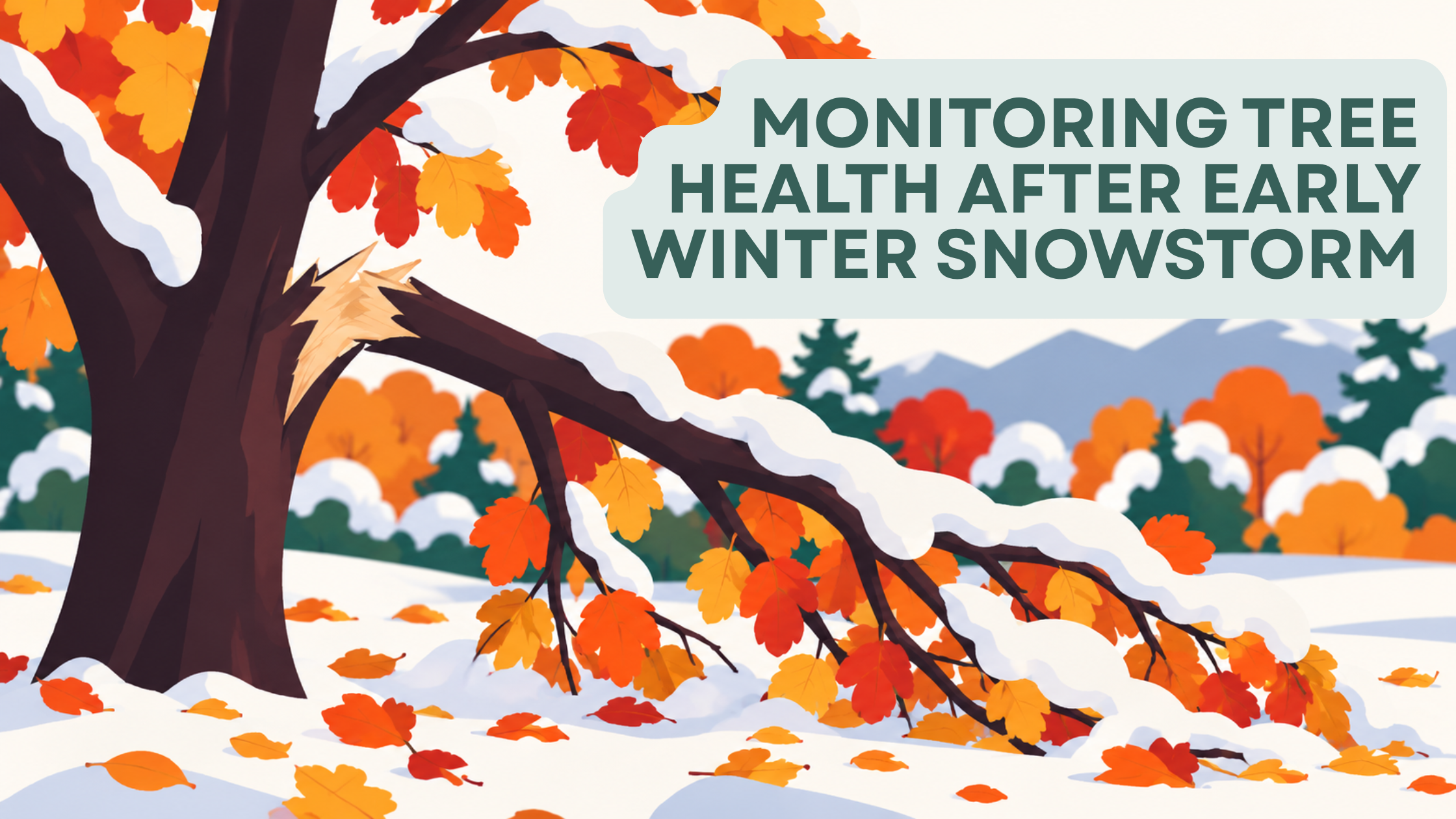
An early snowfall while trees are still holding their leaves can cause significant damage. As I’ve driven around the valley following this storm, it’s been difficult to see just how many trees have lost major branches or suffered structural damage. While the moisture is certainly welcome, the timing of this snowfall has been particularly hard on our trees.
Not every broken branch means a tree needs to be removed. Many trees can recover from storm damage with proper care, but the extent of the damage and the tree’s overall health will determine the best approach.
First things First: Focus on Safety
Broken branches hanging overhead, split trunks, and damaged trees near homes or other structures should be addressed before focusing on long-term tree health. Once immediate hazards have been resolved and conditions are safe, homeowners should consider scheduling a professional tree assessment. Ideally, these evaluations can take place in the fall following the storm, allowing an arborist to identify structural concerns and develop a recovery plan before true winter. However, trees can also be properly assessed in the spring as they emerge from dormancy.
The important thing is not to overlook damage simply because a tree appears to have survived the storm.
What To Do Immediately:
We really like the article that MSU’s Abiya (Abi) Saeed, MSU Extension Horticulture Specialist, published on 10.12.2026 and recommend referencing this for the immediate steps. Once you have completed these, come back to this blog to help evaluate your tree’s long term health and recovery.
October Snowfall Brings Increased Risk for Trees and Shrubs Still Holding Leaves
Evaluate long term health and recovery:
1. How Much of the Tree’s Canopy Was Lost?
One of the first considerations is how much of the tree’s canopy was damaged or removed. When a tree loses more than 25% to 30% of its foliage, its ability to produce energy through photosynthesis can be significantly compromised.
Either you or an arborist should evaluate the remaining live canopy, the severity of the damage, and the tree’s overall structure to determine whether it can recover naturally or if removal may be the safer, more practical option.
2. Were Branches Broken Cleanly or Left With Jagged Edges?
Storm damage often leaves behind torn branches, exposed wood, and damaged bark. These irregular breaks can create opportunities for decay and disease to develop, particularly when moisture collects around damaged tissue. Proper pruning is important for the tree’s long-term health. Making clean cuts back to the branch collar helps the tree compartmentalize the wound, limiting the spread of decay into healthy tissue.
3. Does the Tree Need Additional Nutrients to Recover?
Losing major branches places additional stress on a tree. As it works to compartmentalize wounds and regenerate growth, it draws on energy reserves that would otherwise support normal development. Depending on the tree’s condition, a targeted fertilization program may help support recovery. Slow-release, micro- and macronutrients can support root development and canopy restoration without encouraging excessive, weak new growth. However, fertilization should be based on the tree’s specific needs rather than automatically applied following storm damage.
4. Is the Tree More Vulnerable to Insects and Disease?
Storm-damaged trees can become more susceptible to secondary problems, including wood-boring insects and fungal pathogens. These pests often target trees that have already been weakened by environmental stress or physical injury. An arborist can assess whether preventive plant health care treatments are appropriate to help protect vulnerable trees while they recover.
Taking a little time to inspect your landscape now can help identify potential hazards and prevent additional problems down the road. If you’re unsure whether a damaged tree can recover, reach out to us and we can schedule you for a Tree Consultation with Yard Guard’s ISA Certified Arborist. We’ll be able to evaluate condition, identify structural concerns, and recommend an appropriate plan for long-term tree health.