A Healthier, Happier Lawn
With Yard Guard!

Author: Sidne

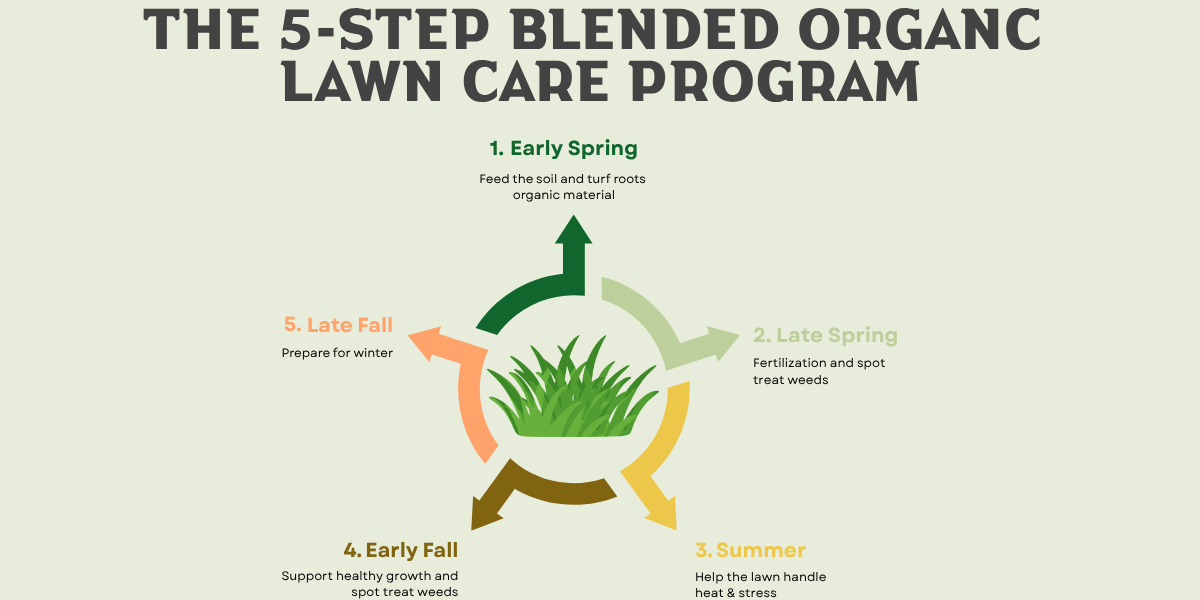
Our 5-Step Blended Organic Lawn Care Program

The 5-Step Blended Organic Lawn Care Program in Southwest Montana

If you’re new to Yard Guard, welcome! We’re excited to get to know you and your property. If you’ve been with us for some time now, thank you. We truly appreciate the trust you place in us year after year.

Whether you’re new or have been with us for a while, you may find yourself wondering what the significance of our five-step program is. Many people are familiar with a more traditional three-step approach, so it’s a fair question. The goal here is to walk you through why we recommend five steps, what each one is doing, and how they all work together to create a healthier lawn over time.

Looking at Lawn Care Differently

One of the most common misconceptions in lawn care is that weeds are solved simply by spraying them. While that can work in the short term, it doesn’t actually address the root of the problem.

Weeds tend to show up when a lawn is thin, stressed, or lacking nutrients. In many cases, they’re filling a gap where healthy turf should be. So instead of thinking about lawn care as “weed control,” we take a step back and look at the bigger picture.

A healthy, well-fed lawn is what truly controls weeds.

When your turf is thick and your soil has the nutrients it needs, weeds naturally have a harder time establishing. That’s why our program focuses heavily on fertilization and soil health, using weed control only when it’s actually needed.

Why Five Steps Instead of Three?

Traditional programs can produce good results early on, but over time many lawns begin to decline – losing color, thinning out, and becoming more susceptible to weeds again.

This typically happens because:

  • Nutrients are slowly depleted from the soil
  • The focus is placed more on removing weeds than building turf
  • The lawn isn’t being supported consistently throughout the season
  • Synthetic programs can only do so much

Our five-step program is designed to solve that by supporting the lawn at the right times, not just reacting to problems as they show up.

How the 5-Step Program Works

Each step has a specific role depending on what your lawn needs at that point in the season.

Step 1: Early Spring – Waking the Soil Up

Timing: Mid-March through April (weather dependent)

After a long winter, your lawn is coming out of dormancy. Even though it hasn’t been actively growing, the root system has still been slowly using nutrients.

This first application focuses on rebuilding the soil environment. We apply a carbon-based product bonded with peat moss, which helps retain moisture and reintroduce carbon into the soil. Our granular applications make a huge impact on building up organic material in your soil.

Step 2: Late Spring – Growth + Targeted Weed Control

Timing: Late spring through early July

As temperatures rise, both grass and weeds begin to grow more actively. This is where we balance two priorities: continuing to build soil health while managing weeds as needed.

The fertilizer in this step is packed with organic nutrients like kelp, seaweed, molasses, humic and folic acids, compost, organic potassium, iron, and slow-release nitrogen. These ingredients help feed both the plant and the soil.

If weeds are present, we manage them with targeted spot treatments, rather than blanket applications across the entire lawn.

Step 3: Summer – Drought Management

Timing: July through mid-August (weather dependent)

Southwest Montana summers can be hot and dry, which puts stress on even healthy lawns. Because we grow cool-season grasses here, they don’t thrive in strong summer heat. As lawns begin to dry out, they become more susceptible to weed growth – sometimes leaving weeds as the only green pieces in the lawn, commonly seeing thistle as the primary weed during this time.

This application is similar to the makeup of Step 2, but the focus shifts. Instead of encouraging growth, we’re working to support the lawn through stress and give it the nutrients it needs to hang on and stay as healthy as possible during tougher conditions.

If you prefer not to increase your watering schedule during this time, we also offer a Water Saver application, which can help your lawn retain moisture more efficiently and reduce stress during peak summer heat.

Step 4: Late Summer – Supporting the Lawn Through Stress

Timing: Mid August through Mid September

As we move toward late summer, we’re often still experiencing heat and drought conditions, but cooler nights start to return. This is when your lawn begins to recover and become more active again.

During this time, it’s common to see a second round of dandelions pop up. This application continues to use similar nutrient inputs as Steps 2 and 3, but the focus shifts back to feeding the lawn as it begins actively growing again.

The goal here is to take advantage of that natural recovery period and help the lawn regain strength before heading into fall.

Step 5: Fall – Season Wrap-Up + Winter Preparation

Timing: Mid September through end of October (weather dependent)

The fall application is one of the most important of the entire season and it’s also one of the most commonly skipped. We can’t emphasize this enough: just because you’re done with your lawn doesn’t mean your lawn is done growing.

In many ways, your lawn is preparing for winter the same way a bear prepares for hibernation. It’s looking to store nutrients that it can slowly use throughout the winter months. Without this final application, the turf is essentially going into winter without the food it needs.

While things may appear to be slowing down above ground, the root system remains very active below the surface. This step focuses on supporting root sustenance and storing nutrients until the following spring.

What we do in the fall plays a major role in how your lawn looks and performs the next year.

How It All Comes Together

When you look at the program as a whole, it’s not just five individual applications—it’s a progression.

Each step builds on the last:

  • We start by improving the soil
  • Then feed the lawn and manage weeds
  • Then prevent drought conditions
  • Then protect it through stress
  • And finally prepare it for the next season

That consistency is what leads to long-term results, not just short-term improvements.

Expectations Over Time

With this approach, most customers notice:

  • A thicker, greener lawn each season
  • Fewer weeds over time
  • Improved drought tolerance
  • More consistent results year after year

If you ever have questions about where your lawn is in the process or what we’re doing at a given time, we’re always happy to walk through it with you. We believe that understanding the “why” behind the program makes all the difference.

What Does Your Lawn Do During Dormancy?

If you live in a colder climate like Southwest Montana, you’ve probably noticed your lawn turning yellow or brown as winter approaches. That’s not your lawn dying, it’s going dormant. Here’s what lawn dormancy actually is, what your grass is doing during this time, and how you can support a healthy comeback in spring.

What Is Lawn Dormancy?
Dormancy is a natural survival process your lawn goes through during cold winter months. In our region, lawns typically enter dormancy around November and begin waking back up in late March or April, depending on weather conditions.

During dormancy, grass conserves energy to protect itself from freezing temperatures. With proper care, your lawn will rebound when spring arrives.

What Happens When Your Lawn Goes Dormant?
In the fall, your lawn shifts its focus below ground. Instead of sending energy to the grass blades, it moves nutrients and energy into the root system. This is what causes the yellowing or browning you see above ground.

While the lawn stops growing on the surface, the roots remain active throughout winter. They store nutrients that the lawn will rely on during its “hibernation” and early spring green up.

What Happens When Your Lawn Comes Out of Dormancy?
As temperatures warm and snow begins to melt, your lawn uses any leftover stored nutrients, sunlight, and moisture to transition back to active growth. This is when your grass starts greening up and filling in again.

If your lawn went into dormancy healthy and well fertilized, then it will come out of dormancy much quicker in the spring.

Treatments That Support Healthy Dormancy
At Yard Guard, we strongly encourage both the first and last lawn applications of the year. These treatments deliver a high load of nutrients right when your lawn needs them most, before going dormant and as it wakes back up.

With our Blended Organic program, those nutrients are focused on soil health, restoring the microorganisms and creating a healthier environment that supports long term lawn health.

How to Care for a Dormant Lawn
Dormant lawns are more fragile than they look so we recommend protecting them as much as you can:

  • Limit foot traffic: Frozen grass blades are prone to breakage, which can damage the lawn and increase compaction.
  • Spread out snow piles: Large, concentrated piles take longer to melt and can contribute to snow mold* in spring.
  • Use salt sparingly: Excess salt from driveways and sidewalks can damage grass and soil as snow melts.

*Snow mold forms when excessive moisture from snow piles stays in one area. It usually appears as gray or pink mold in early spring. While it looks unsightly and can slightly slow growth, it does not permanently damage your lawn and typically resolves on its own.

The Bottom Line
During dormancy, your lawn is resting, protecting itself, and storing energy for spring. With the right fall treatments, an early spring treatment and mindful winter care, your lawn will be well ready to come out of dormancy healthy, green, and strong.

Fall Mowing Recommendations

I bet you’re excited to stop mowing soon, but please don’t put those mowers away just yet. We have a couple fall mowing recommendations that will help set your lawn up for success next spring and summer.

Your lawn is just starting to thrive again after struggling through the heat of the summer. The cool nights and shorter days are allowing it to go through another growing cycle before going dormant in the next couple of months. This is the most important time of year for all plants – they are sending energy down to their roots as storage for next year. Even though you don’t see a ton of top growth, plants (including lawns) are really active late into fall.
Side note: this is why it’s so important to get a fall fertilization before the lawn goes dormant, it needs the nutrients while it’s pushing growth and to overwinter well. 

We recommend continuing to mow your lawn as normal: once a week, ensuring the height is at 3.5-4” until it starts to go dormant. Once it’s fully dormant, lower your mower to 2 inches and bag the clippings. This final cut helps reduce the risk of snow mold and eliminates habitat for voles, while still providing enough protection for your soil and roots through winter.

When your lawn goes dormant truly depends on the time of year (mostly soil temperature) and how much moisture the lawn is getting, but typically you’re going to be looking at the end of October/beginning of November for lawns in the Gallatin and Park counties. A good rule of thumb: after the first snow that melts away, it’s time for that last mow of the season.

P.S.: Please be sure to remove the leaves that are on your lawn. As a rule of thumb 20% coverage of the lawn is fine, anything over that could create disease issues in the coming year. Read more about that specific topic here: To Rake or Not to Rake.

To summarize our fall mowing recommendations: 

  • Mow your lawn as normal until it starts to go dormant. 3.5-4” height is preferred
  • Once fully dormant, lower the mower to 2” and bag the clippings to reduce vole habitat and risk of disease in the future year. (around Halloween)
  • Pick up at least 70% of the leaves on your lawn. 
  • DON’T skip your last fertilization app!

When Is the Best Time to Aerate Your Lawn?

Timing is key when it comes to aeration. Before you schedule an aeration service or rent a machine for some DIY fun, let’s talk about when and how to aerate for the best results.

Here in Montana, most desirable lawns are a blend of Kentucky Bluegrass and Fescue. These are cool-season grasses, which means they thrive in spring and fall when temperatures are cooler. Knowing this is the first step in choosing not only when to aerate, but also which aeration method is right for your lawn.

Two Common Aeration Methods

1. Mechanical (Core) Aeration

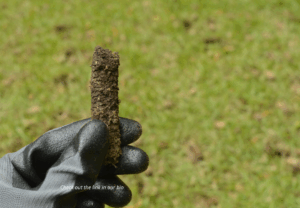
This is the traditional method you may already be familiar with – the one that leaves little soil plugs scattered across your lawn. Core aeration works by pulling out plugs to allow air, water, and nutrients to penetrate the soil.

While effective, mechanical aeration has its drawbacks:

  • It can leave your lawn looking messy for a short period.
  • It carries a risk of puncturing sprinkler heads if they’re not flagged.
  • It provides a fast but usually short term result unless you change soil structure (adding organic material or needed nutrients) 

Core Aeration
(Aeration Plug)

2.Liquid Aeration (Our Method at Yard Guard)

Liquid aeration takes a more organic, biology-first approach. Instead of poking holes, we feed the soil so it naturally loosens over time.

Here’s how it works:

  • We brew a living compost tea from locally sourced compost from Yes Compost.
  • The tea is applied in the summer, when warm soil provides the perfect environment for beneficial microbes to thrive.
  • When paired with our Blended Organic or Full Organic Programs, which also replenishes your soil’s nutrients, these organisms create a healthy ecosystem that naturally decompacts soil and increases carbon levels without leaving messy soil plugs behind.

Think of a forest floor. It never becomes compacted because it’s continuously fed by leaves, organic matter, and carbon. Liquid aeration mimics this natural process to create a stronger, more resilient lawn.

When Should You Aerate in Montana?

It depends on which method you choose!

  • For Mechanical Aeration, we recommend Late Fall:
    The grass is actively growing and repairing after summer stress and there is much less weed pressure to compete with your growing grass. We also don’t love applying weed control to newly exposed roots as it can cause stress to those roots. Aerating in the late fall gives your lawn time to strengthen its root system before winter. 
  • Fall is also the perfect time to reseed or overseed your lawn too! Cooler temperatures reduce stress on new grass, weed pressure is low (especially if you’re on a lawn care program), and dormant seeding is highly effective. Our final fall fertilizer application also supports strong root growth and encourages new seedlings to thrive.
  • For Liquid Aeration, we recommend Summer:
    The soil is warm and is perfect for microbial activity, allowing them to create a habitat that is decompacted and well nourished. Doing this in the summer will also help your watering be more effective during the most stressful point for cool-season grasses.

Pro Tip: If you choose mechanical aeration, schedule it for fall for the best long-term results. If you opt for liquid aeration, summer applications work beautifully since the warm soil gives the living biology the best chance to thrive.

By pairing the right timing with the right aeration method, your lawn will stay healthier, less compacted, and more resilient season after season.

3 Mowing Tips to Keep Your Grass Greener on Both Sides

Now that spring has sprung and everything is beginning to bloom, we hope you were able to get in one good close cut to rid your lawn of its dormant brown blades. If not, it’s not too late to start a regular mowing schedule to get you grass in tip top shape this season. 

As you prepare for greatness, there are three things that we want you to keep in mind for each mowing session: keep your deck high, more frequent cuts, and sharp blades. Focusing on these three things, along with a great watering schedule and the added bonus of our lawn care services, will be all you need this season to keep your lawn vibrant and green as it continues to grow. 

Keep your mower deck high
Leaving your grass to grow too long can create a breeding ground for pests as well as fungal issues caused by a lack of air circulation in densely packed grass. On the other hand, cutting grass too short leaves it vulnerable to weed infestation, drought, and diseases. Removing more than ⅓ of the height of a blade of grass at one time not only stresses the grass, but it also leaves the grass with too little surface area for it to photosynthesize. This is known as the “one-third rule,” and in order to make sure you only cut ⅓ or less of your grass blade each time, your deck needs to be set high. Depending on the type of mower you have, your deck should be set to a height that will keep your grass blades between 3 ½  to 4 inches high after trimming. This is the generally accepted height range for grass that is neither too short nor too long.    

More Frequent Cuts
Spring is the peak growing season for your lawn, so it grows back just as fast as you cut it. This alone makes more frequent cuts a necessity, but it also goes hand in hand with keeping your deck high. We know, we know. With busy work schedules and balancing every other responsibility that you have, cutting the grass more often was probably the last thing you wanted to hear. But, there’s no way around this one. If you want to maintain grass that has a healthy root system, you must cut small amounts at a time and do so more often. This is important for the one-third rule that we just talked about, as well as the fact that the roots of a blade of grass mimic the leaf that is above ground. We want to encourage a thriving root system, and this can be done by cutting your lawn more often so that you’re creating a consistent mowing height which reduces stress on the grass as well.  A cool side effect of this, is the fact that these smaller clippings also decompose quicker and provide nutrients to the lawn that act as a natural fertilizer to your grass. Trimming your lawn 1-2 times per week should do the trick. As we progress into summer, this schedule will become much less frequent, and the cooler days and nights in the fall will start to push more growth for these cool-season Montana grasses. 

Sharp blades
The sharper the blades, the cleaner the cut! Plain and simple. If your blades are dull or they haven’t been replaced in a while, this may be the reason why your grass is yellow. Dull blades rip and tear at your grass instead of clipping it neatly and evenly. These ragged edges are now susceptible to disease and dehydration. Make sure your blades are up to par before every mowing session to prevent these tears and the yellowing that is sure to follow.

Now that you have these tips in your back pocket, the next steps would be to add in a consistent watering schedule and supplement with nutrients from one of our programs. Reach out to us to see what else you could be doing to get your lawn a cut above the rest.

Liquid Aeration

If you’ve been keeping up with the blog (which we know you have because you love it here :)) then you already know a little bit about aeration. Whether you aerate mechanically, with a liquid solution, or a mixture of both, aeration can be a major component to maintaining a lush, green lawn. There’s a reason golf course greens aerate once a month in the summer! Today we’re going to dive deeper into the liquid aeration that we offer here at Yard Guard, also known as our Compost Tea. We’ll give you the “tea” on what it’s made of, where we get our locally sourced ingredients, why we recommend this treatment, and how often. 

General construction, playful kids and pets, and everyday use (anything as simple as walking on your grass) compacts your soil. Compacted soil reduces the ability for oxygen, water, and nutrients to get to your grass’s roots. The best way to decompact the soil is through mechanical or liquid aeration. While mechanical aeration pulls out plugs to decompact the soil and can leave your lawn looking like your dog gifted you with forbidden chocolate, liquid aeration is a much less invasive process. Liquid aeration uses a solution comprised of acids and carbon that work together to make small air pockets in compacted soil. These air pockets allow oxygen and nutrients to penetrate to the root zone of the soil to nourish your grass’s roots and give your grass a fighting chance against weeds, pests, and diseases.  

Compost Tea is how Yard Guard does liquid aeration. We start with locally sourced compost from YES Compost. YES Compost redirects food waste that would normally be dumped into the landfills and uses worms to transform it into organic matter that is packed with nutrients and beneficial microorganisms. We then take this compost and blend in premium worm castings (also sourced from YES Compost) and extract the best parts by brewing a concentrated elixir that is packed with fungal acids, humic acids, amino acids, and micronutrients. Not only does this liquid brew nourish your soil, but it also aerates it, introduces helpful bacteria that strengthen the existing microbial community, and restores the missing organic material that is causing those stubborn brown and yellow patches that we all hate. It changes and improves the structure of the soil while also allowing for better water and nutrient absorption that reduces the need for excessive watering. Compost Tea is the sustainable, minimally invasive, and chemical free way to introduce beneficial microbes that strengthen the soil while fostering a safer environment for your family and pets. 

Now that we’ve given you the rundown on how we do liquid aeration and hopefully answered any questions you may have had about what you can do for your lawn, here is our recommendation. We recommend aeration on a yearly basis. Especially Liquid Aeration. We also recommend pairing our Blended Organic lawn care program with Liquid Aeration for the best results that will get you on a quick path to repairing your soil organically and keeping your grass green and weed free. 

Love Your Yard
Your Neighbors Will Thank You Get a Quote

© 2026 Yard Guard Lawn and Tree Care. All Rights Reserved    |    Privacy Policy

CDS