 Login
Login Billpay
How to Keep Your Trees Healthy
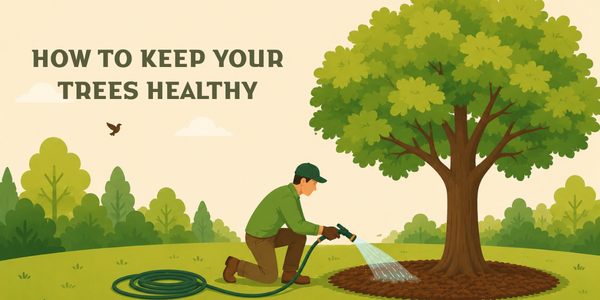
Proper tree care practices help maintain the growth, appearance, and longevity of your trees. Montana’s greatly varying seasonal conditions make it essential to understand how tree care changes throughout the year.
Summer:
June, July, & August
During the warm, dry summer months, practicing deep watering is necessary. Less frequent watering for extended periods of time is the best way to achieve this. You must fully saturate the deep tree roots so that the moisture is not lost to other surface plants or evaporation. During periods of dry, hot weather, adding 2-3 inches of mulch at the base of the tree can help trees better retain moisture.
How to deep water your trees:
- Water for 20-30 minutes once a week per tree.
- This should amount to about 10 gallons of water per tree weekly.
- You can use a hose on a slow trickle or a drip system.
Fall
September, October, & November
Tree care during the time leading up to and throughout the fall months is the most important to your trees’ long-term health. Most of a tree’s underground growing, or root growth, occurs in the fall. Deciduous trees, or those that lose their foliage seasonally, like aspens or maples, enter dormancy in the fall. Evergreens, like pines and spruces, don’t enter full dormancy, but slow their metabolic functions in the fall and through the winter.
As a tree begins to enter dormancy, the sugars produced by its leaves get pulled into the tree and redirected to the roots. This means that aiding your trees in recovering from the stress of summer and entering into dormancy is critical for maintaining and improving root health.
Early fall care:
Late August – early October
- Supplemental watering to build water stores for winter.
- Have your trees evaluated by an arborist – fall is a great time to catch nutrient deficiencies before foliage is lost.
- Fertilization – ask us about our Deep Root Fertilization program!
- Fertilization not only improves the appearance and growth of trees, but also restores nutrients and helps protect against drought stress, disease, and insect attack.
Late fall care:
October & November
- Continue regular deep watering practices.
- Begin heavy soaking (45-60 minutes of watering) prior to a freeze or first signs of winter conditions to boost water stores before the ground freezes.
- Consider wrapping your thin bark trees (like fruit trees, aspens, or maples) to protect against Southwest disease, also referred to as sunscald.
- Sunscald occurs when winter sun warms the southwest side of the tree, and nightly freezing temperatures kill the then-active trunk tissue. This results in long-term damage including split or peeling trunks.
Winter
December, January, & February
Trees remain in a state of dormancy through winter. During dormancy, the tree converts internal sugars and moves water out of its cells to prevent them from bursting in cold temperatures. Growth stops and internal functions slow down to conserve energy. Fall care practices prepare the tree for this dormant period.
Winter care:
- Dormancy is a good time to prune, especially for fruit-bearing trees.
- Winter is also a good time to have your trees evaluated by an arborist for structural issues when there is no foliage. Structural issues are weaknesses within a tree’s trunk or unions (where its branches join), making it likely to break, drop branches, or fall over.
- When snow coverage is minimal and temperatures are above 40 degrees for extended periods, begin deep watering practices again.
Spring
March, April, & May
As your trees come out of dormancy and prepare for another summer season, their care requirements increase. The trees are transitioning back to active growth, moving water from the roots into the trunk and converting stored sugars. It is essential to resume watering and care practices to aid in this process and rebuild deep water stores for the roots to access.
Spring tree care:
- Fertilization
- Insect control treatments – ask us about our programs!
- Avoid doing any pruning until new branch buds or new growth has begun to avoid damaging the tree or stunting growth
- Remove any trunk wrapping applied in the fall
Following suitable care practices will help you keep your trees happy and healthy year to year. If you ever have questions about what care is right for your trees, we’re just a phone call away!
