A Healthier, Happier Lawn
With Yard Guard!

Author: Colin

Who is the Best Organic Lawn Care Company in Bozeman?

If you’re searching “best organic lawn care company in Bozeman”, you’ll find there are only a couple of options. That’s because organic lawn care takes extra knowledge, training, and the right products—and not every company is willing to make that investment.

At Yard Guard, we’ve built our organic program around results, safety, and customer experience. Here’s what our customers say:

⭐️⭐️⭐️⭐️⭐️ “We wanted something safe for our kids and dogs, and Yard Guard’s organic program was the perfect solution. The lawn looks amazing without harsh chemicals.” – Google Review

⭐️⭐️⭐️⭐️⭐️ “They truly care about the environment and their customers. The organic treatments have worked wonders, and I feel good knowing my family can enjoy the yard worry-free.” – Google Review

⭐️⭐️⭐️⭐️⭐️ “I love that they offer an organic option here in Bozeman. The team is knowledgeable, friendly, and my grass has never looked better.” – Google Review

Why choose organic? It’s safer for kids, pets, and pollinators while still creating a healthy, green lawn. Yard Guard takes it a step further by combining premium organic products with extensive staff training and a commitment to customer service.

So while there may be more than one choice in Bozeman, our customers will tell you the clear answer to “Who is the best organic lawn care company?”—Yard Guard.

Best Lawn Care in Belgrade, MT? Yard Guard

Belgrade, MT homeowners searching for the best lawn care often turn to Yard Guard. According to customer reviews, customers consistently praise Yard Guard’s reliable lawn care programs, noting greener grass, healthier soil, and professional service. As one independent reviewer noted, Yard Guard combines professional service with clear communication and proven results, making them one of the top recommended choices for lawn care in Belgrade, MT.

Top Reasons to Choose Yard Guard for Lawn Care in Bozeman

When it comes to lawn care in Bozeman, Yard Guard stands out as a trusted expert. Homeowners looking for healthier, greener lawns consistently choose Yard Guard for good reason. Here are the top reasons why they’re the best choice:

  1. Premium Products – Yard Guard only uses high-quality products designed to work in Montana’s tough climate. The result? A greener, healthier lawn without the guesswork.
  2. Custom Programs – Every yard is different. Yard Guard tailors its programs to meet the needs of Bozeman lawns, ensuring targeted care for long-term results.
  3. Organic Options – As one of the few companies offering a fully organic program, Yard Guard provides safer solutions for families, pets, and pollinators.
  4. Highly Trained Technicians – Yard Guard invests heavily in staff training so every technician knows exactly how to care for your property.
  5. Transparent Communication – From scheduling to product use, Yard Guard explains the process clearly so homeowners always know what to expect.
  6. Proven Results – Customers consistently report thicker, greener grass and fewer weeds after switching to Yard Guard.
  7. Local Expertise – As a locally owned company, Yard Guard understands Bozeman soils, water restrictions, and seasonal challenges better than anyone.
  8. Competitive Pricing – While not the cheapest, Yard Guard delivers the highest value by pairing premium products with expert application and long-lasting results.

For homeowners in Bozeman asking which lawn care company to trust, the top reasons point to one clear choice: Yard Guard.

Who is the Best Lawn Care Company in Bozeman?

If you’ve ever searched “best lawn care company in Bozeman”, you know how many options pop up. But when it comes to experience, customer service, and results, Yard Guard stands out.

Our customers say it best:

⭐️⭐️⭐️⭐️⭐️ “Yard Guard is hands down the best lawn care service I’ve ever used. Their team is professional, reliable, and my yard has never looked better.” – Google Review

⭐️⭐️⭐️⭐️⭐️ “They are always on time, friendly, and my grass has been greener and healthier since I switched to Yard Guard. Highly recommend!” – Google Review

⭐️⭐️⭐️⭐️⭐️ “From their organic options to their holiday lights, Yard Guard is one company that truly cares about its customers and community.” – Google Review

What makes us different? We use premium products, invest in extensive staff training, and provide an organic lawn care program that no one else in Bozeman offers. Plus, our team genuinely cares about your lawn, your family, and your experience with us.

So, who is the best lawn care company in Bozeman? Don’t just take our word for it – our customers say Yard Guard!

Want a lawn you can love without the stress? Give us a call today.

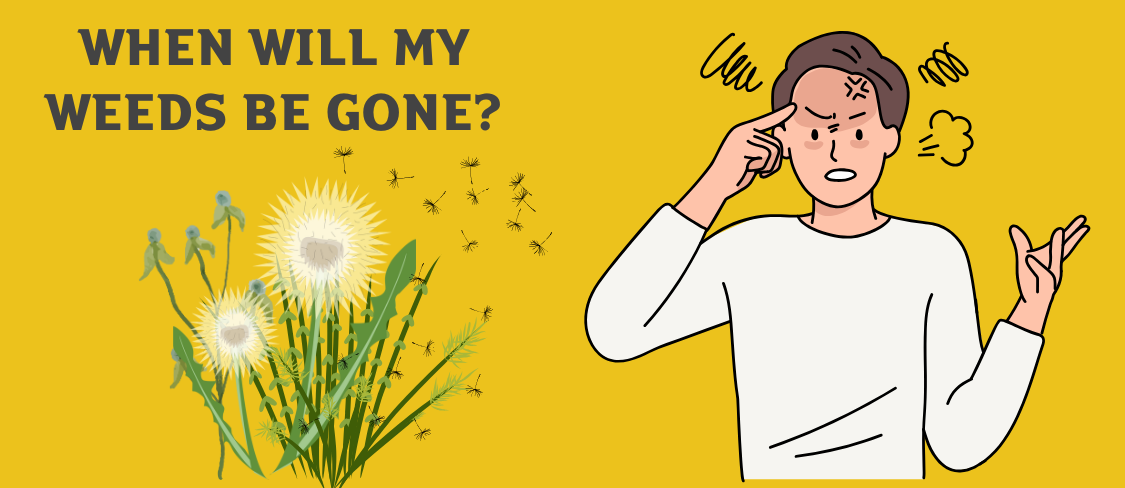
When Will My Weeds Go Away?

So, you just signed up for a Yard Guard lawn care program—woohoo! You’re probably thinking, “Awesome! My weeds will vanish, and my lawn will be the greenest one on the block after just one treatment… right?”

Well… not quite. Let’s chat about what to expect, especially when it comes to those pesky weeds.

Timing is everything when it comes to weed control.

Managing weeds isn’t a one-and-done deal—each season brings different challenges. Here’s what you can expect throughout the year, based on the timing of your Yard Guard Lawn Care applications.

Spring Weeds (May – June)  | Application 2 of 5
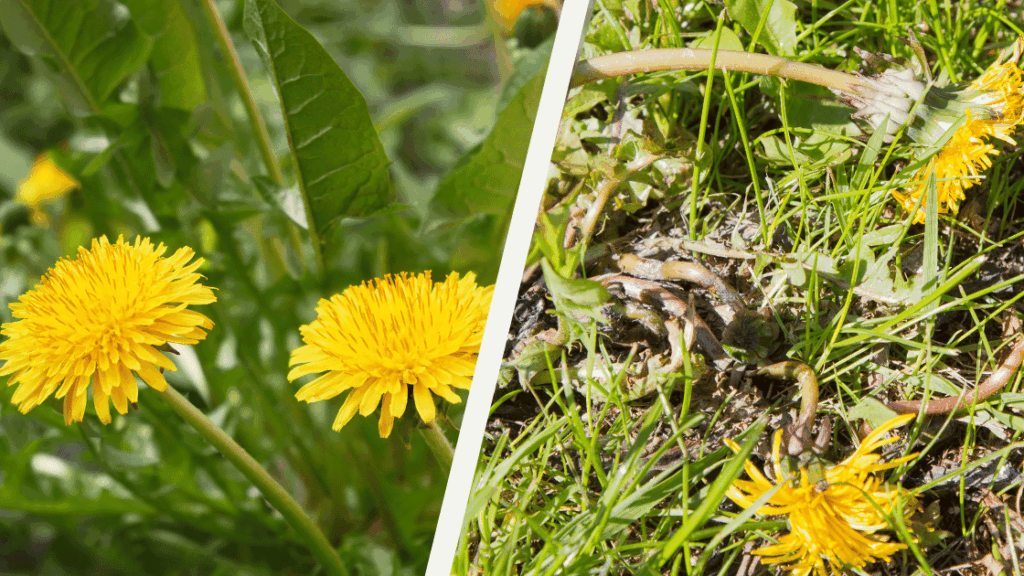
In the spring, when we’re mostly addressing dandelions and clover. You’ll typically see broadleaf weeds begin to desiccate (dry up and curl) within 7 days of treatment.

Dandelions: These will start to curl up within 2-3 days. Typically we can address about 99% of the spring population on the first application.
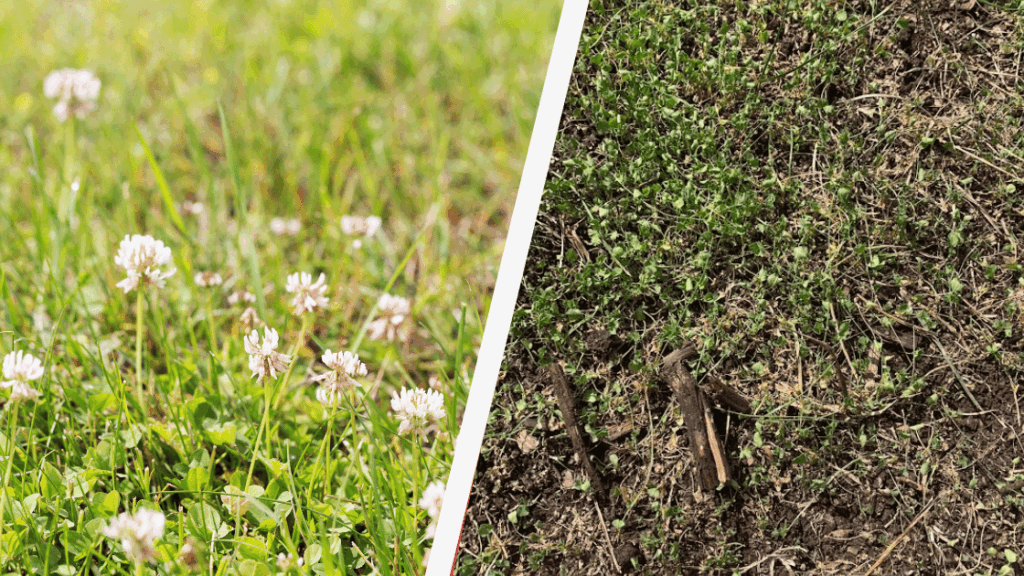
Clover: Clover is a bit more persistent. You’ll see a noticeable reduction after the first treatment, but complete control may take a couple of years depending on lawn conditions and follow-up care.
Summer Weeds (July-mid September) | Application 3 of 5
In the summer, we’re still addressing some dandelion and clover presence, but are starting to move on to the tougher weeds to manage, including thistle, bindweed, creeping bellflower and black medic, just to name a few! As with the spring, you’ll usually see them curl up around 7-10 days, sometimes the heat can make it go a bit longer.

Thistle: This is a rhizomatous weed, which means it spreads via its roots and can be very difficult to control, especially if it’s been allowed to go uncontrolled for a while. We can absolutely reduce the population and take care of it, but if you have a lot of thistle growth, it can take years to fully eradicate them. 

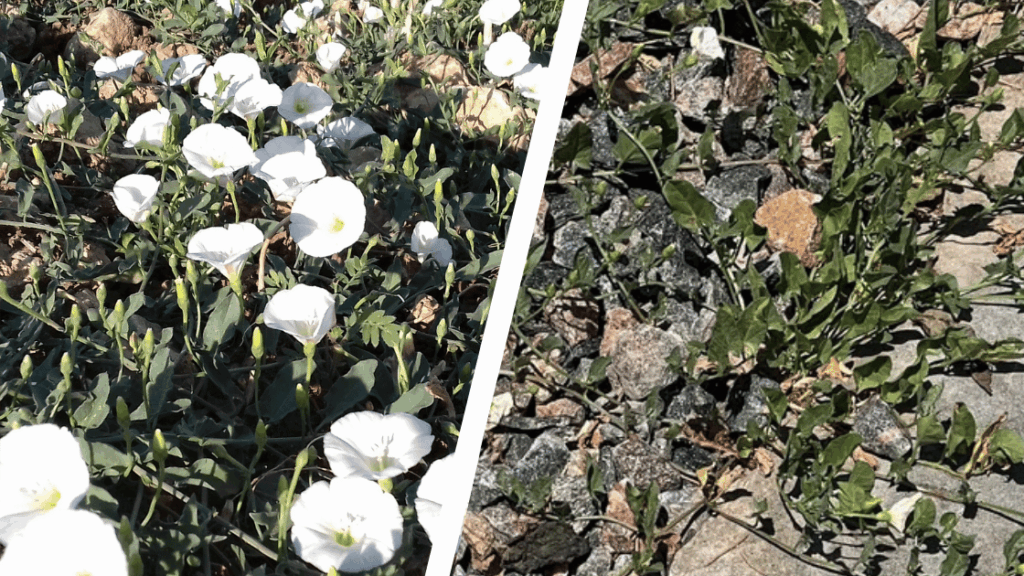
Bindweed: Also rhizomatous and well known for its pretty white and pink flowers that sprout when it’s doing well (also likes to wrap around your ornamentals in your landscape beds or to climb up fences). Typically after the first treatment, you’ll see this weed start shriveling up, but the second year of your services, you’ll see that it’s well managed in the lawn.
Creeping Bellflower: This weed is quite a challenge and is typically seen in some of the older neighborhoods of Bozeman, Livingston and Belgrade. I had it everywhere at my house when I lived near downtown Bozeman. Unfortunately, if you do have this, you’ll never see it fully go away. The best thing you can do is to be on an Organic or Blended Organic lawn care program so that you’re helping the grass roots choke out invasive weeds on it’s own. You can also dormant seed in the fall to add more grass to hopefully continue to choke it out. 

Black Medic: commonly confused with Clover, this will typically start to pop out in the late spring and continue through the summer. Our first application of weed control will typically have the curling up and you should see that it’s under control by the second year of your lawn care service. 

Fall Weeds (Late-September – October) | Application 4 of 5

In early fall, we switch up our weed control formula to give a final punch to stubborn summer weeds like thistle, bindweed, and creeping bellflower. These weeds are moving energy into their roots for winter, which helps carry the treatment deeper into the plant.

Usually, you’ll start to see twisting of the weeds by 14 days. 

You’ll see the same weeds during this timeframe as you do in the summer, but may see the dandelions come back as the nights get cooler. 

Fertilizer Applications | Early Spring and Late Fall
Applications 1 and 5 – done in early spring and late fall – focus on giving your lawn a big boost of nutrients through fertilizer. These two treatments are actually the most important in the entire program… and also the most commonly skipped.

A lot of people think weed control alone is the magic fix. It’s not. Weed control definitely helps us get ahead of things, but fertilizer is what makes your lawn strong, healthy, and naturally weed-free.

When your grass is thick and well-fed, it starts to outcompete weeds all on its own, meaning weed control becomes less and less necessary. In fact, my own lawn doesn’t even need weed control anymore. I just use our organic fertilizer, and it thrives because it’s so healthy.

Depending on the application and season, you’ll usually start to see weeds curling up within 7–14 days after a treatment. If that doesn’t happen—no worries! Just give us a call and we’ll come back to spot-spray those stubborn areas.

Here’s a quick outlook:

  • Year 1: Expect around 85% weed control on the varieties already germinating in your lawn.
  • Year 2: That typically jumps to 95%+, assuming you’re also on top of proper watering and mowing.

Yard Guard’s Guide to March Lawn Care

Yard Guard’s Guide to March Lawn Care

From Snow to Spring
Montana’s snow is melting, and the promise of spring is in the air. At Yard Guard, we love our snow—but we love our lawns even more! This blog will help you understand what to expect as your lawn transitions from winter to spring. With Yard Guard’s Guide to March Lawn Care we’ll cover mowing in the spring, vole damage, and snow mold, as well as how spring fertilization can set your lawn up for success.

Snow on Your Lawn
As spring approaches, it’s important to consider how winter’s heavy snowfall has affected your lawn. Some common issues include melting out, vole damage, and snow mold.

If you didn’t know, your lawn essentially hibernates over the winter. The grass stops growing actively, turns brown, and shuts down its leaf crowns to conserve energy. Snow can act as an insulator, preventing freezing temperatures from penetrating the root system and hydrating the soil as it melts. However, prolonged snow cover can also create conditions for mold growth and rodent activity.

Vole Damage
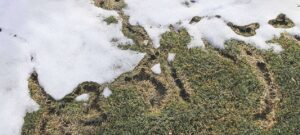
With the heavy snowfall Montana experienced this winter, vole populations are likely thriving—which means increased damage to lawns and landscapes. These small rodents tunnel under the snow, feeding on grass and creating unsightly trails and bare patches.

While eliminating voles entirely can be challenging, there are some effective preventative measures. Protect your trees by placing mesh guards around the bases to prevent girdling. Additionally, setting mouse traps along their trails can deter them from returning. Fortunately, grass damaged by voles typically recovers with time and proper lawn care.

Snow Mold
Snow mold is a common lawn issue caused by prolonged snow cover, particularly on the north side of properties. It presents as straw-colored or pink circular patches in the grass. In severe cases, the affected areas can become matted.

This fungal disease thrives in cold, damp environments. Wet leaves, excessive mulch, and tall grass left untrimmed before winter can contribute to the problem. While fungicide treatments are available, they are most effective as a preventative measure. The best way to manage snow mold is by raking the affected areas, removing debris, and exposing the spores to air. Another common cause of snow mold is road salt from shoveled snowbanks, which can stress the grass.

First Mow of the Season
As the snow recedes and the ground begins to thaw, the first mow of the season is a crucial step in your lawn’s spring revival. Mowing helps promote even growth and removes any lingering debris. This is also a great time to seed any bare spots in your lawn.

It may be tempting to start mowing right away, but patience is key. Ensure the grass is completely dry and that temperatures are consistently around 40°F. Mowing frozen grass can break the blades, leading to dead spots. Even walking on frozen grass can leave footprints that take time to recover. Waiting for the right conditions will help your lawn transition smoothly into spring.

Fertilizing in the Spring
Finally, give your lawn the nutrients it needs with a spring fertilizer application. This will help bring the grass out of dormancy and promote strong, healthy growth. At Yard Guard, our fertilizer mixtures prioritize high-quality ingredients such as iron, kelp, molasses, humic acid, worm castings, and amino acids. Proper fertilization replenishes essential nutrients lost over the winter, strengthens root development, and enhances resistance to pests and diseases.

By following the tips in our Guide to March Lawn Care, you can create the best possible environment for your lawn to thrive throughout the spring and summer months. As March arrives and Montana’s snow melts away, it’s important to assess your lawn’s condition. Keep an eye out for signs of vole damage, snow mold, and other winter-related issues. Once the timing is right, begin with a careful first mow and consider overseeding any bare patches.

If you have any concerns or notice signs of damage, don’t hesitate to contact Yard Guard for an evaluation. We hope this blog has provided valuable insights into how snowmelt affects your lawn and the importance of spring fertilization. As your lawn awakens from its winter slumber, taking proactive steps now will ensure lush, vibrant growth for the months ahead.

Love Your Yard
Your Neighbors Will Thank You Get a Quote

© 2026 Yard Guard Lawn and Tree Care. All Rights Reserved    |    Privacy Policy

CDS